Study title: The clinical and molecular spectrum of AGO2-associated Lessel-Kreienkamp neurodevelopmental syndrome
An important study led by Prof. Davor Lessel and Prof. Dr. Hans-Jürgen Kreienkamp provides the most comprehensive characterization of Lessel-Kreienkamp syndrome (LESKRES) to date. By identifying 45 new individuals with AGO2 gene variants, the researchers expanded the globally confirmed diagnostic cohort to approximately 70 individuals. Experimental evaluations revealed that these genetic variants disrupt AGO2 protein function in diverse ways—altering protein interactions, regulation, and intracellular microRNA-mediated RNA control—moving the field to a deeper understanding of underlying biological mechanisms.
Expressing gratitude to the participating families, Dr. Lessel emphasized that these functional findings lay the groundwork for ongoing research using patient-derived neuronal cells to identify potential therapeutic targets.
What Did the Researchers Find?
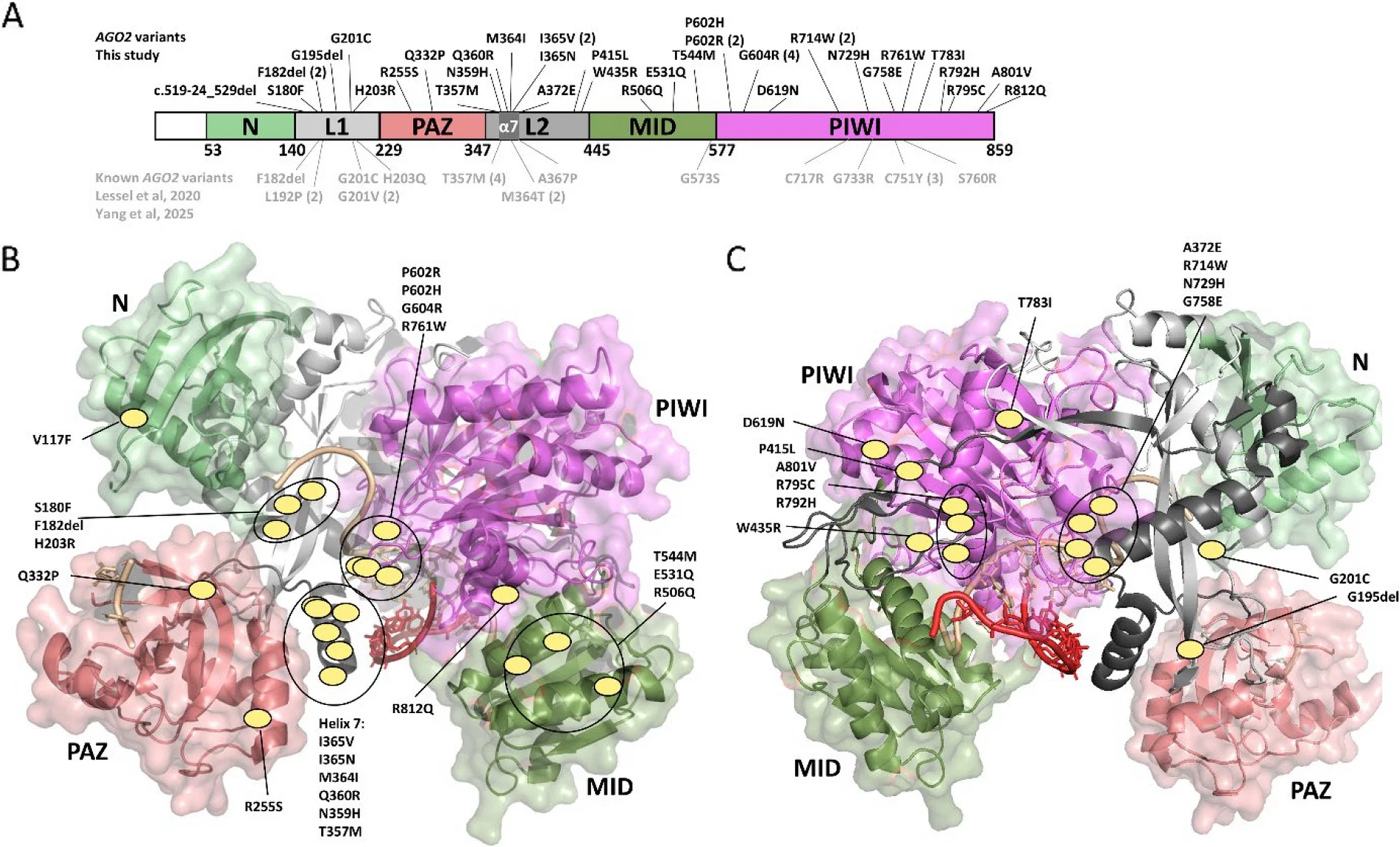
Genetic Clustering: Identified 33 unique AGO2 variants (30 novel) that cluster in critical structural regions, including the L1 loop (e.g. Phe182del, Gly201Cys), helix-7 of the L2 region (e.g. Thr357Met), and several loops in the PIWI domain (e.g. Pro602His). See Figure 1 for a visual overview.
Clinical signs and symptoms of individuals
Core Phenotype: Speech and language delay (97%), intellectual disability (97%), and motor developmental delay (93%) form the universal core presentation, alongside receptive language impairment (81%).
Neurological & Behavioral Traits: Muscular hypotonia (69%), autistic traits (58%), ADHD (56%), gait abnormalities (52%), cerebral MRI abnormalities (44%), seizures (32%), and neonatal apnea/respiratory issues (31%) are prevalent across the cohort.
Systemic & Dysmorphic Features: Frequently observed features include neonatal feeding difficulties (44%), skeletal anomalies like clinodactyly (40%), gastrointestinal disorders (30%), visual impairments (26%), short stature (25%), alongside distinctive facial features such as epicanthic folds (52%), thin upper lip (48%), broad nasal bridge (43%), and head circumference anomalies (39%).
See Table 1 in the paper for a detailed overview.
Why Does It Matter?
"This is the largest study of AGO2-related Lessel-Kreienkamp syndrome to date," notes Dr. Davor Lessel. "By comparing genetic and clinical findings, we defined the spectrum of the disease much more clearly. A larger, better-characterized group allows doctors to recognize the condition more reliably, gives families more meaningful information about its course, and helps us determine which clinical features should be monitored.”
A heartfelt thank you goes to Dr. Lessel and the entire research team for undertaking this pivotal study. Their dedication to delving deeper into the underlying mechanisms of LESKRES and their compassionate collaboration with patient families mark a crucial step forward for the entire community.